


Key takeaways
- CLA (CliftonLarsonAllen) is working with Digits to train a proprietary AI model on its own client base and workflows, drawing on more than 100 years of firm history and 77 firms that have joined CLA.
- CLA’s solutions master plan, launched in 2022, calls for eliminating data entry across the firm. The target is repetitive work, not professional judgment.
- CLA now weighs four options for every capability: build, buy, partner or orchestrate. End-to-end solutions usually require orchestrating several at once.
- CLA’s CAS practice took off only after the firm stopped treating it as bookkeeping or an extension of tax and rebuilt it as its own business, delivery and staffing model.
- Jen’s word for the next decade of professional services is human. She expects the shift to unfold over the next five to seven years.
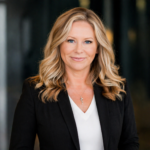
In this episode of the AI-Native Accounting® podcast, I sat down with Jen Leary, CEO of CLA (CliftonLarsonAllen). Jen stepped into the role in 2021, when the profession and the world were in the middle of enormous change. Since then, CLA has grown substantially, built the largest CAS practice in the profession and made some bold bets on what accounting and advisory will look like next.
I expected a conversation about technology, and we had one. But the answer that stayed with me came at the very end, when I asked Jen for one word to describe the next decade of professional services. She said: human.
Clients stopped planning in ten-year horizons
Three years ago, Jen said, client conversations were operational: how to rebound from closures, how to manage a workforce that had gone remote. Today they are strategic. Clients want to talk about outcomes, new business models, the impact of AI and the next generation of leadership.
The planning horizon has shrunk with it. CLA’s clients once worked from ten-year plans, then five. Jen sees the trend settling at three years, “because we just see things moving so darn quickly.”
That has a direct consequence for firms. Clients do not need an advisor who reports on last quarter. They need one who can help them make decisions in a market that will not hold still.
Build, buy, partner or orchestrate
CLA recently announced a strategic relationship with Digits, and the detail that matters is this: CLA is training its own proprietary model on its client base and workflows. Jen’s case for it is data. CLA became a brand in 2012 when Clifton Gunderson and LarsonAllen came together, and 77 more firms have joined since. That is more than a century of accumulated, industry-specific knowledge.
The CLA promise is “know you and help you.” Historically, knowing a client depended on one engagement team and what that team had personally seen. Training a model on decades of firm data, in what Jen called “a very safe, very protected way,” lets that knowledge reach every client.
How CLA decides what to build has changed too. When the firm was smaller, it bought off-the-shelf software and plugged it in. With more than 200,000 clients, that no longer works. CLA now weighs four options: build, buy, partner and a fourth that is emerging fast, orchestrate. An end-to-end solution solves four or five problems at once, which means several partners, internal teams and tools working together. Jen said that systems thinking “has really challenged us as an organization.”
For firm leaders evaluating AI, this is the point to take away. Buying a tool is not the same as redesigning how you deliver service.
Capture the mundane, not the judgment
I asked Jen which parts of an advisor’s judgment can be captured in a model and which never should be. Her answer was direct: “We have no work streams that are looking to capture the judgment. We’re looking to capture the mundane.”
CLA’s solutions master plan, launched in 2022, calls for the elimination of data entry across the firm. Jen called it a big, audacious goal. The reasoning is about compression. CLA’s teams carry enormous volume around the September and October tax deadlines. Remove the manual entry, and people can do what they do best: build relationships, solve problems and develop outcomes. “That’s where we win.”
She was candid that the client impact is still in development. CLA is building toward speed first, getting closer to real-time financial results, and then using that time to deliver deeper insight across the 14 industries the firm focuses on. Clients, she said, are “interested and waiting to see what comes next.” They have seen plenty of hype. The firm’s job is to prove it with great service.
What CLA got wrong about CAS
This was my favorite part of the conversation. CLA has the largest CAS practice in the profession, and Jen refused to pretend the firm saw the future clearly. “We learned from doing things wrong.”
CLA moved into CAS more than 20 years ago because its tax clients needed more planning and more help throughout the year. The first mistake was treating CAS as a bookkeeping practice. The second was treating it as something adjacent to tax. It only became special when CLA built it as a different service delivery model, business model and staffing model. In Jen’s words, “It’s not the CPA firm model.”
Even then, CLA reached a point where it had to scale differently, and stepped back to rework its tech stack, processes and staffing. Jen also noted that CLA is the largest firm in the country that does not offshore, so it is building all of that talent here.
Plenty of firms are now trying to ramp up CAS quickly. The lesson from CLA is that advisory cannot be bolted onto a compliance operating model and expected to scale.
Knowing the client is still human work
With about 9,000 people across roughly 130 U.S. locations, CLA’s model is built on proximity. Its people walk plant floors, understand the missions of the not-for-profits they serve and show up in the schools they work with. Jen put this year’s client retention rate at about 92%, and said the number matters less than the generations of families and businesses the firm gets to serve, from growing a company to transitioning it to managing the wealth it creates.
She also shared the leadership belief she has completely changed her mind about: that whoever holds the title always knows the answer in the room. Her job, as she sees it now, is to surround herself with people more capable than she is and remove the barriers in their way.
The word for the next decade
Jen’s word was human, and she meant it practically. The paper, the manual work and the data entry are what the profession will work its way through. It will not happen overnight or in the next 24 months, but five to seven years from now she expects the human side of the business to come to the forefront. Firms have to shift their talent and their mindset to be ready for it.
Her advice to young people considering accounting, advisory or wealth management: run to it.
That is the conversation I want more firm leaders having. AI is changing how the work gets done. The firms that win will use that capacity to know their clients better.
Watch the full conversation above, or stream it on YouTube, Apple Podcasts or Spotify.
Learn more about CLA and Digits.
∼Kacee Johnson, Executive Director
Frequently asked questions
What is CLA doing with Digits?
CLA (CliftonLarsonAllen) has a strategic relationship with Digits, an AI-native accounting platform, to train a proprietary AI model on CLA’s client base and workflows. The goals are to reduce manual data entry, deliver financial results closer to real time and bring industry-specific insights to clients at scale.
Will AI replace accountants at CLA?
No. Jen Leary says CLA has no work streams aimed at capturing professional judgment. The focus is on automating repetitive processes like data entry so professionals have more time for relationships, problem solving and client outcomes.
What does build, buy, partner or orchestrate mean?
It is how CLA decides how to deliver a new capability. The firm can build it internally, buy existing technology, partner with a company that brings complementary expertise, or orchestrate several technologies, partners and internal teams into one end-to-end solution.
What mistakes did CLA make building its CAS practice?
Jen Leary says CLA first treated client advisory services as a bookkeeping practice, then as an extension of its tax practice. CAS only scaled once CLA built it as a separate service delivery, business and staffing model.
What is the CLA promise?
The CLA promise is “know you and help you.” Jen Leary says AI can extend that promise by putting decades of firm knowledge to work for every client, while the relationship itself stays with CLA’s people in the communities they serve.
Why does Jen Leary say the future of accounting is human?
As AI removes paper, manual work and data entry, professionals will spend more of their time on relationships, judgment and outcomes. Jen expects that shift to come to the forefront over the next five to seven years.
Full transcript
Cold open
JEN LEARY (00:06): We have no work streams that are looking to capture the judgment. We’re looking to capture the mundane.
It calls for the elimination of data entry across the board at CLA.
So if we can reduce that compression, if we can reduce that manual entry and let them do what they do best, which is build relationships, solve problems, develop outcomes, that’s where we win.
I will tell you what we are building toward. Number one, to do things faster.
More insights.
It’s about a 92% client retention rate.
I think sky’s the limit.
We are the largest firm in the country that doesn’t offshore. So we are building all of that talent here.
KACEE JOHNSON (00:47): What is one leadership belief that you’ve completely changed your mind about?
JEN LEARY (00:53): I’ll tell you that knowing the answer in the room all the time.
KACEE JOHNSON (00:58): What is one word that you would use to describe the next decade?
JEN LEARY (01:02): This one might surprise you, Kacee, but I’m gonna say human.
Interview
KACEE JOHNSON (01:10): Welcome to the AI Native Accounting podcast presented by Digits. I’m your host, Kacee Johnson, executive director of the foundation. Today’s guest is Jen Leary, CEO of CLA, one of the largest professional services firms in the country, and a firm that has made some bold bets on what the future of accounting and advisory will look like. Jen stepped into the CEO role in 2021 at a moment when the profession, and quite frankly, the world, was undergoing enormous change. Since then, CLA has grown substantially, built the largest CAS practice in the profession, and continued investing in new capabilities. Jen, it is so great to have you with us.
Thank you for taking the time.
JEN LEARY (01:50): Thank you, Kacee. What a pleasure to be here. I love the podcast.
KACEE JOHNSON (01:54): Thank you. We’re growing it. So, Jen, you stepped into the CEO role almost six years ago, and the firm has grown substantially since then. What did you believe CLA needed to become when you took that role, and what do you believe now that you maybe didn’t necessarily believe back then?
JEN LEARY (02:14): You know, Kacee, I love how you started the intro, too. I mean, think about where we were those many years ago, right? I think we were a little bit in a state of recovery from the pandemic, that’s for sure. So, it’s been an amazing journey for CLA as an organization. I don’t think it started in 2021. Since we’ve become a brand in 2012, we’ve seen consistent growth through what I like to call a stewardship model. We are owner-led, we are focused on clients within what we call the heartbeat of this country. And so, with that of mind, we invest for the long term, and we’re focused on continuing to evolve for what our clients need.
So, back when we became a brand in 2012, they needed us to be a really good CPA firm. But as you mentioned in your intro, we’ve now built the largest CAS practice in the country. We’ve also built a full-on global network, we’ve built out digital capabilities, so we have a tech company embedded inside the firm, and we’ll continue to do that to make sure that we are hitting the mark for our clients.
KACEE JOHNSON (03:16): I’m glad you brought that up about the clients, because that is one thing about CLA that I am so drawn to, and the evolution that you’re talking about, it’s not happening in isolation, right? But CLA is changing because of the clients, and you’ve talked about what they need from their advisors is changing. What are business owners asking of CLA today that they were not asking for maybe three years ago?
JEN LEARY (03:41): So, back to the three years ago, where were we as a society? We were still in recovery. I think many of the conversations were just around how do we rebound from closures, how do we understand workforces that are moving remote, and just how do we live in this sort of new world? Now, our clients have evolved past that, and they’re talking about outcomes, they’re talking about moving through business models, and the impacts of AI, the impacts of the next generation of leadership. So, I think the conversations have become much more rich in terms of what is coming into the future. If you sort of had to put it in a bucket, I’d say three years ago, we were very operational.
We were very much about fixing problems, creating opportunities, and recovery. Right now, I see us being much more strategic, our clients looking upon the horizon. Now, how far that horizon goes, you know, we used to look at 10-year plans, then we looked at five years. I’ll tell you the trend right now is three years because we just see things moving so darn quickly.
KACEE JOHNSON (04:45): It’s incredible. I was doing a session for Cal Poly’s MBA program, and they’re still teaching them to do these 10-year, not that school in particular, but academic institutions are teaching
JEN LEARY (04:55): Them to do 10-year business plans.
KACEE JOHNSON (04:55): I’m like, oh, just throw that out. It’s too long, too much.
JEN LEARY (05:02): We’ll go backward 10 years, right? Yeah, exactly. We weren’t thinking of half the things that we were thinking of. It’s incredible.
KACEE JOHNSON (05:08): That’s an exercise of futility at this point, I think.
But meeting those new client expectations requires more than adding a few AI tools to the existing model. CLA recently had a significant announcement about a relationship with Digits that appears designed to rethink the underlying platform itself. The announcement says that CLA will train its own proprietary model using its client base and workflows. In practical terms, what will make this model distinctly CLA?
JEN LEARY (05:42): Well, I think it has everything to do with the decades of data that we have under our umbrella at CLA. So I said when we became a brand in 2012, and that is the reality of Clifton Gunderson and LarsonAllen joining together, I’ll tell you that both of those firms had amazing legacies that came before it. So think about we’ve been in business for over 100 years when you look at our lifelines, and it wasn’t just those two bold firms coming together in 2012. It was the 77 other firms that have joined us. And so that’s a lot of activity that has accumulated just a massive amount of data that is now super industry specific.
So Kacee, what I’m so excited about was I would talk about the CLA promise, which is to know you and to help you. And historically, that know you has been about gathering information on more of a one to a small number of people ratio. Right. You work with your engagement team. They know you. They do all that they can to help you based on their domain, based on their known experiences. Well, today, with the advent of technology and the relationships like with great firms like Digits, we can capture some of that data and really help our clients based on all of the decades of information that we have.
So we are training these models on our data in a very safe, very protected way with the results super focused on outcomes and those industry insights that will help our companies, our clients make better decisions, maybe make quicker decisions. That’s what we’re focused on. And that’s what we’re really excited about.
KACEE JOHNSON (07:19): Outcome-based is the new business model, it seems. Now, the Digits relationship, it definitely is an interesting example. When people look at do we build, buy or partner, how do you decide whether CLA should build a capability, buy it, welcome a firm into the partnership or form a strategic relationship like you did with Digits?
JEN LEARY (07:43): I think that is such an interesting question, Kacee. And if I could, like it’s changed. Our decisioning has changed over the years and it’s changed based on the size that we are and what’s possible. So historically, like back in 2012, we would buy our connections through major vendors. And we were small enough that we could do that. Right. You could buy something that was off the shelf. You can plug and play with very little sort of altercation to it. Now, we have to understand how any software, if it’s a big vendor, if it’s a small technology company, can come into our environment and serve a massive amount of clients.
So CLA has over two hundred thousand clients. So to do anything at scale, that is a high repeatable process. So that is something that is unique. So we can no longer just look at off the shelf vendors. So that’s where we get from the buy to the build plus buy. And then the building is something that CLA has been building technical acumen inside of our house for many years. And we have some amazing technical experts, which I’m blown away. Engineers, data enthusiasts, just all kinds of great people. And so we’ve been able to combine that effort to create something our own. But then you mentioned this new place, which is strategic partnerships, because we know what we know.
We have strong domain knowledge about accounting, about wealth, about advisory. We are growing that domain knowledge about technology and product development. But if we can find great partners that would accelerate that and in the best scenarios, our efforts are helping them grow as well. That is perfect. And I’ll tell you, there’s actually a fourth one. So it’s like build, buy, partner. And then the fourth one that’s coming out is orchestrate, because what we’re finding is that with our bold ambition of doing end to end solutions, we’re not solving any one problem. We’re probably solving four or five problems in an end to end solution. So it won’t be one partner plus one CLA team plus something off the shelf.
It will probably be multiple. And that’s the systems thinking that has really challenged us as an organization. But if we can keep our minds eye on a true end to end process and we can be a great collaborator in the profession, I think we’ll continue to see success. But it is it’s big and it’s bold and it is a lot of work. But I think for what clients need and deserve, we should do it well.
KACEE JOHNSON (10:07): And you make a good point because the technology may provide the infrastructure, but the real source of differentiation is the knowledge and the judgment that CLA has developed across that hundred years. And I think you did you say seventy seven firms?
JEN LEARY (10:23): Yeah. Oh, yeah.
KACEE JOHNSON (10:24): OK. And across thousands of people, right. Clients engagements, et cetera. So but you’re effectively trying to encode those decades of institutional judgment. Which part of an adviser’s judgment can be captured and scaled in which parts do you feel should never be reduced to a model?
JEN LEARY (10:43): That’s so interesting. You know, and I will tell you that there this is an iterative process. We are learning along the way. I’ll tell you that we have no work streams that are looking to capture the judgment. We’re looking to capture the mundane. We’re looking to capture the process, the repeatable things, the things that honestly give us no joy, which is just repetitive data entry. And so our solutions master plan that we launched in 2022, it calls for the elimination of data entry across the board at CLA. That is a big, audacious goal for us. But the judgment that you mentioned, you know, the hundred years of accumulated domain expertise, the human in the loop that elevates in this particular scenario.
So we are excited about using our subject matter experts to bring those outcomes to our clients at mass scale and make it easier for them, especially right around now. I mean, we’re right around some big tax deadlines in both September and October, and it just becomes such an issue with compression. Our teams have such volume at these dates for many reasons. So if we can reduce that compression, if we can reduce that manual entry and let them do what they do best, which is build relationships, solve problems, develop outcomes. That’s where we win.
KACEE JOHNSON (12:04): And you’re right. I mean, I do talk with so many firms, especially around these times when there is such a huge volume of work, they just feel so much overwhelmed. So let’s bring it down from that strategic level to the client experience, because ultimately clients will judge this transformation by what actually changes for them. What will the first clients experience differently and how have they received that shift?
JEN LEARY (12:31): I’ll tell you that the shift is still coming because we’re still in development. So I would love to come back, bring me back in like six months or a year. I’ll give you the testimonials you should bring some of our clients on, right? Hear it from them. They’re the ones that matter. But I will tell you what we are building toward. Number one, to do things faster. To the extent that we can get somewhere closer toward real time financial results, that would be a priority for us. So faster service for sure. More insights. As I mentioned, the CLA promise to know you and help you. 14 industries that we are super passionate about.
If we can get the financials and the reporting done faster, then that gives us that time, that depth and breadth to bring those industry insights. And that would be I would call that level one of where we think we will go in the next six to 12 months.
KACEE JOHNSON (13:23): Excellent. And when they first saw the announcement or when your teams have been reaching out to them, like what has been their reception to this change?
JEN LEARY (13:32): I would say interested and waiting to see what comes next. There is so much that is in the media and there’s so much that can be perceived potentially as hype that our clients are very practical. I say they’re the heartbeat of this country. I mean, they are family owned businesses. They are not for profits institutions, state governments. They have been around a long time and they’ve seen a lot of things. So the best thing that we can do is let them know that we’re thinking ambitiously. We’re investing for the future and then just prove it with great service, prove it with great service. So that’s our goal.
KACEE JOHNSON (14:09): And those outcomes, to your point, are what they care about most.
JEN LEARY (14:13): That’s exactly right. That’s exactly right.
KACEE JOHNSON (14:16): So CLA already has the largest CAS practice in the profession. What do you think that CLA understood early about this business model that many firms are only beginning to understand now and really trying to ramp up quickly because they understand that’s really the future of professional services?
JEN LEARY (14:35): I love the CAS practice. Can I just tell you the one thing that I will tell you? We learned from doing things wrong. I cannot be on this podcast and say here’s why we knew the future of CAS was X, Y and Z, because that is just not true. What we knew was back to the CLA promise to know you and help you. We knew our clients needed more, especially those that were tax clients of ours. We would get in there and we would help them with that annual process. And we realized, number one, they need more planning. And number two, they need more help around the year so that way they can take decision quicker.
So with that of mind, that started us into the CAS world like over 20 years ago. But the number one thing we did wrong was we saw it as a bookkeeping practice, number one. And then we saw it as something we did adjacent to the tax practice, number two. It wasn’t until we saw it as a different service delivery model and a different business model, different staffing model that we really were able to build something special. And even then, we saw growth for many years. But we got to the point where we needed to scale differently. I mean, it is a different business model. It’s not the CPA firm model.
So we had to take a step back a couple of years ago, look at our tech stack, look at our processes, look at the way that we’re staffing things and then continue to build again. And so we’re in the next generation of our CAS practice. I think the sky’s the limit. We have an amazing team. Our clients are helping us build what they need for the future. We are the largest firm in the country that doesn’t offshore. So we are building all of that talent here. That’s something else that is unique and something that we focus on a lot, especially in that CAS practice. So those are just a couple of things, maybe lessons that we learned, things that we did wrong.
And then the investment that we continue to make into what we think is the future of CAS, which I think you’re right. Professional services, the Office of the CFO, evolving to the Office of the COO. That’s where we really can serve as a profession. And
KACEE JOHNSON (16:46): I feel like in the profession is a bit of a defining tension happening right now that all the firms are trying to navigate as the technology becomes more capable. The human promise does have to become that much more meaningful. You mentioned CLA’s promise is and it is deeply human. It’s know you and help you. What does it mean to know a client when more of the daily financial work is being handled by the software and the tools?
JEN LEARY (17:14): I will tell you that the knowing is all about the relationship and being deep into the communities that we serve. So if you think about CLA, so we have about 9000 people. We have about 130 locations in the U.S. And many of them are in or they are all in communities that we serve clients at a very intimate level. So if you think about the size offices that we have, CLA will have offices that range in size. Our average office size is forty to fifty people. We have some as small as six and then our largest is in Minnesota, which is over a thousand.
But that geographic footprint and where our people are close to our clients provides us a unique opportunity to have a deep relationship with those clients, which means we’re walking the plant floors, which means we are at the not-for-profit. We understand the mission. We’re actually usually helping with some of that mission, especially on the not-for-profit side for the school systems that were there. We’re in the school. So we could do a lot of our things remote. And we do we have hybrid working arrangements when that is helpful. But we spend a lot of time out in the market, out at our client site.
And that is something that drives the knowing our clients and nothing is stagnant about the markets that we’re serving right now. So if we know our clients in 2026, what they’re going to need from us in two years will continue to evolve. We’ll still have the core compliance needs. I believe we have a moat around that as a profession. And that is an important thing just for capital markets in this country. But how else we can serve through advisory or CAS that will continue to evolve. You know, our we call them principals, but our principal to employee ratio is probably one of the lowest in the country.
We’ve got one principal partner equivalent to about five or six people. That is extraordinarily low. So that’s why I say we are partner led. We’re principal and we’re owner led. We are in the market with some really great talent.
KACEE JOHNSON (19:18): And it sounds deeply embedded in the day to day with your clients, which.
JEN LEARY (19:23): Yes,
KACEE JOHNSON (19:24): I mean, then it makes sense why CLA so sticky,
JEN LEARY (19:27): I think. I mean, we do have I think this year it’s about a ninety two percent client retention rate. And for us, it’s beyond the numbers. It is about the generations that we get to serve. It’s remarkable. And even what we’ve built in this organization. So if we can help a family grow a business and maybe transition that business to the kids or some other entity, and then we can help them on the wealth side. So we’ve built one of the largest RIAs attached to a professional services firm in the country as well. We manage $17 billion of assets right now for our clients. And that has been that’s provided us a remarkable opportunity to serve, because then we get in these really interesting conversations about, you know, as you’ve worked so hard your whole life, you’ve accumulated something really special.
You want to share it with the community. We can help you want to share it with your kids. We can help. Those are the things that we get to stay in the lives of the families and the companies that we work with for generations.
KACEE JOHNSON (20:29): I love your passion, not just for your people, but for your clients and what CLA does. If you don’t mind, I’d like to ask you a few quick questions about to give us some insight into you as a leader and how you see the future. What is one leadership belief that you’ve completely changed your mind about?
JEN LEARY (20:52): Oh, I don’t know if I have just one. I’ll give you one. I’ll tell you that knowing the answer in the room all the time. I when I grew up, I always thought that those were in those that were in certain titles. They always knew the answer, even like in school. Right. You always thought the principal knew all the answers and then you got to college and then you get into your career. That whoever’s in the seat, whoever has the title, has all the answers. It is humbling to be in a role and to be in rooms where you know that you don’t have all the answers and that you surround yourself with people that are smarter, more capable than you are in a whole myriad of things.
And it’s your job to make sure that they are well cared for and you’re removing barriers so they can get their job done. That is something that has completely shifted in my mind’s eye from the time that I started in my career to where I am now.
KACEE JOHNSON (21:46): And you’re right. At least when I was early on in my career, it seemed like a lot of the CEOs felt like they had to surround themselves in an echo chamber and like it all fell on them. And it has changed quite a bit. Thank goodness. But if you could give one piece of advice to your 18 year old self just coming out of high school, what would you what would you tell yourself?
JEN LEARY (22:10): Oh, my gosh. You should have seen me when I was 18. I was I would tell myself to relax. Just chill out. Everything will be fine. You know,
KACEE JOHNSON (22:19): I remember that.
JEN LEARY (22:20): Oh, my goodness. The worries, the concern, what’s going to happen, et cetera. You know, life works out. And as a mom of two kiddos that are in college, I mean, that to me is something I think we need to impart on the next generation because they put so much pressure on themselves. And there’s a lot that is challenging in the world right now. And so if we can provide a voice of calm, I would say, like, if we can if our generation can be that steady hand on the wheel, that can tell them we’re going to be fine. There are things going on that aren’t unique.
But if we look back in history, there have been times of transformation and we’ve always been fine. But to build that confidence. But I think I would just tell myself to just relax, maybe drink a little less caffeine. Just relax.
KACEE JOHNSON (23:04): Nowadays, it’s the energy drinks. I have a 15 year old. And yeah, that’s right.
JEN LEARY (23:09): Exactly. Exactly.
KACEE JOHNSON (23:12): Last, what is one word that you would use to describe the next decade, let’s call it, of professional services?
JEN LEARY (23:20): OK, this one might surprise you, Kacee, but I’m going to say human. And we’re talking so much about AI And I think that is so utterly important. The security with which we execute with AI is so very important. But the human impact that you can have utilizing these tools is what I see for the next decade. And frankly, for young people thinking of getting into accounting, advisory, wealth, I just tell them to run to it because all the things that I had to fight through and others had to fight through. You did as well, right? I mean, the paper, the manual, the data, we are going to work ourselves through to a new way.
It won’t be overnight. It won’t be in the next 24 months. But five years from now, seven years from now, absolutely. I think the human side of this business is going to come to the forefront in a great way. So we have to be prepared for that. We have to shift our talent. We have to shift our mindset to be able to serve at that level. But that’s what I’m excited about.
KACEE JOHNSON (24:25): And those are all skills that the next generation needs to be thinking about, you know, growing those muscles.
JEN LEARY (24:32): That’s right. Absolutely.
KACEE JOHNSON (24:33): Well, Jen, you are a breath of fresh air. Thank you so much for taking the time and for joining us. CLA is definitely leading the way on many fronts. And I appreciate you giving us a closer look at the leadership decisions and the human considerations behind those initiatives. So thank you.
JEN LEARY (24:50): Awesome. Well, thank you for your podcast. And if there’s anybody that needs any help, they can just reach out to me directly. I appreciate it. I love this profession.
KACEE JOHNSON (24:57): That’s very gracious of you. Thank you. So to our listeners, thank you for joining us. You can stream all of the AI Native Accounting podcasts on YouTube and your favorite podcast platforms. Thank you to our founding sponsor, Digits. If you would like to learn more about becoming an AI-native firm, visit digits.com. Until next time, stay curious to stay ahead.
Transcript lightly edited for clarity.